BLOG

Hamideh Alizadeh
July 20, 2026


Physicians understand the importance of documenting patient encounters accurately and efficiently. They also know the challenges of keeping up with the increasing demands of clinical documentation, such as coding, quality measures, and regulatory compliance. Not to mention the time and cognitive load that documentation takes away from the core mission of providing quality care to patients.
What if there was a way to make clinical documentation easier, faster, and more accurate? What if physicians had an AI copilot that could assist them with capturing the relevant information from patient interactions, generating comprehensive and compliant notes, and providing real-time insights and recommendations based on the latest evidence and best practices?
In this blog post, we will explore the concept of AI medical copilot in more detail. We will explain how it works, what are its advantages and disadvantages, and what are some of the examples of AI medical copilot solutions in the market. By the end of this post, physicians will have a better understanding of AI medical copilot and how it can help them improve their practice and patient care.

AI Medical Copilot
AI medical copilot refers to a system that can generate natural language summaries, recommendations, and reminders based on the patient’s data, the physician’s input, and the relevant medical knowledge.
AI medical copilot is not a replacement for human judgment or expertise. Rather, it is a tool that can augment physicians' capabilities and enhance their efficiency. It can help them capture the patient’s story, document the encounter, order tests and treatments, follow up on results and outcomes, and provide evidence-based guidance.
AI medical copilot uses advanced natural language processing (NLP) techniques to understand and produce natural language. It also uses machine learning (ML) and deep learning (DL) algorithms to learn from large amounts of clinical data and medical literature.
AI medical copilot can work in different ways depending on the use case and the user preference. For example, it can:
AI medical copilot can communicate with physicians through various modalities, such as voice, text, or graphics. It can also integrate with existing EHR systems or other applications to streamline workflow.

The Benefits of AI Medical Copilot
AI medical copilot can offer many benefits to physicians and patients alike. Some of the main benefits are:
Improved Documentation Quality and Accuracy: AI medical copilot can help capture the patient’s story in a comprehensive and structured way. It can also ensure that documentation meets the standards and regulations of the organization and payer.
Increased Productivity and Efficiency: AI medical copilot can save time and effort by automating or simplifying some of the tasks that are repetitive or low-value. It can also help avoid errors or omissions that may lead to rework or penalties.
Enhanced Decision Support and Quality of Care: AI medical copilot can help make better decisions by providing relevant information or suggestions at the point of care. It can also help stay updated on the latest medical knowledge and best practices.
Reduced Burnout and Stress: AI medical copilot can reduce cognitive load and workload by taking care of some of the administrative or clerical aspects of the job. It can also help focus more on patients and their needs.
Increased Patient Satisfaction and Engagement: AI medical copilot can improve communication and relationship with patients by allowing more time for listening to them and explaining their condition and treatment options. It can also empower patients by providing them with education or resources.
| Advantages | Description |
|---|---|
Improved documentation quality and accuracy | AI copilot helps capture patient information accurately and ensures compliance. |
Increased productivity and efficiency | It automates repetitive tasks, saving time and reducing errors. |
Enhanced decision support and quality of care | Provides relevant information and guidelines, aiding in better decisions. |
Reduced burnout and stress | Reduces workload, allowing physicians to focus more on patients. |
Increased patient satisfaction and engagement | Improves communication and empowers patients with education and resources. |
AI medical copilot is not without its challenges and limitations. Some of these are:
| Challenges and Limitations | Description |
|---|---|
Data quality | Relies on potentially incomplete, inconsistent, or inaccurate healthcare data. |
Data privacy | Raises ethical and legal concerns regarding the handling of sensitive patient data. |
Human factors | Requires user-friendly interfaces and user confidence in using AI medical copilot. |
Clinical validation | Clinical recommendations may contain biases, errors, or uncertainties. |
AI medical copilot is an emerging concept that is being explored and developed by various companies and organizations. Some of the examples of AI medical copilot solutions in the market are:
AI medical copilot is a new way to enhance clinical documentation and decision-making for physicians. It can offer many benefits, such as improved efficiency, quality, and outcomes. However, it also faces many challenges and limitations, such as data quality, data privacy, human factors, and clinical validation. AI medical copilot is not a replacement for human doctors but rather a smart assistant that can augment and enhance their clinical workflow.
AI medical copilot is still in its early stages of development and adoption. There are many opportunities and challenges for further research and innovation in this field. Physicians may want to keep an eye on the latest developments and trends in AI medical copilot and see how it can help improve their practice and patient care.
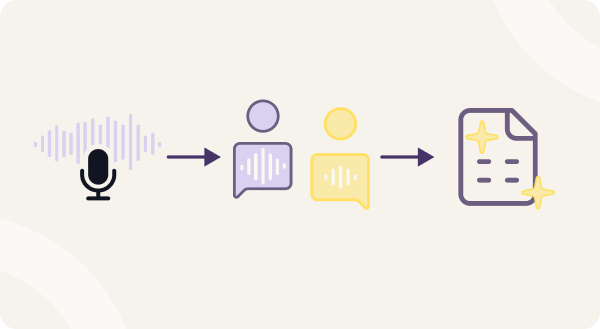
Tali is an AI medical scribe that helps physicians with clinical documentation and serves as a semi-AI medical copilot, enhancing your efficiency and accuracy in healthcare tasks. It can listen to your conversations with your patients, capture the relevant information, and generate accurate and compliant notes for you. If you are interested in trying out Tali for yourself, you can sign up for a free trial today. You can start using Tali right away and see how it can make your clinical documentation easier, faster, and better.
Experience the future of healthcare documentation with Tali's AI-powered solutions.
Start Free TrialRelated Articles

Guides & Resource
June 29, 2026
Guides & Resource
July 6, 2026


Research
July 20, 2026
6
Research
July 20, 2026
6
Research
July 20, 2026
6