BLOG

Tali AI Product Team
July 27, 2026

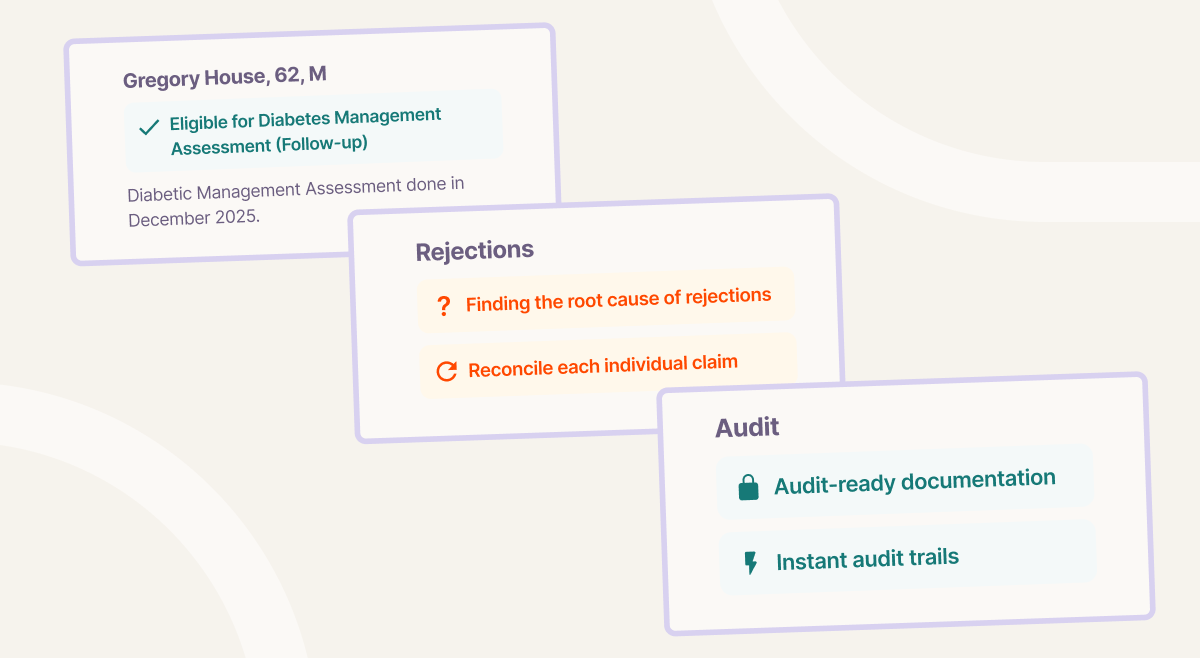
For many Ontario family physicians, the hardest part of FHO+ is not understanding that the model is changing. It is figuring out how to work inside that change without adding one more manual process to an already full week.
That is the problem we are focused on solving.
FHO+ introduces a more operational style of billing. Time matters more. Documentation habits matter more. Eligibility matters more. Continuity matters more. In theory, that can be a positive shift because it better recognizes work that often goes uncompensated or under-recognized. In practice, it also means more things to track, more rules to navigate, and more opportunities for billing work to spill into evenings and admin time.
We do not think that is how this transition should feel.
There is already a lot of education available about FHO+. Physicians can read official guidance, attend webinars, and use calculators to better understand how the model works.
That is important, but it is only part of the job.
The harder part is what happens after you understand the model. You still need a practical way to capture eligible time, keep the right documentation, make valid billing decisions, submit claims properly, and understand what happened afterward. If those steps are fragmented across separate tools, separate people, or separate moments in the day, FHO+ quickly starts to feel like more admin instead of better recognition for the work you are already doing.
That is why we see FHO+ primarily as a workflow problem.
Our goal is not just to help clinics learn FHO+. Our goal is to help clinics live inside it with less friction.
We are building Tali Billing to fit into the clinical workflow, not to create another disconnected process after the visit. That matters even more under FHO+, where success depends less on memorizing the rules and more on handling the workflow consistently.
Instead of asking physicians to calculate everything on their own, keep separate notes for indirect care and admin work, manually think through billing logic, and then piece together financial outcomes later, we are building toward a more connected experience.
The aim is simple: reduce manual effort, reduce billing guesswork, and give clinics more confidence in what they are capturing and why.
One of the biggest practical challenges in FHO+ is time-based billing.
It is one thing to know that certain work can now be billed by time. It is another thing to consistently capture that work during a real clinic day without having to reconstruct it later from memory.
That is why our FHO+ time-based workflow is so important.
We offer FHO+ time-based support within Tali so clinicians do not have to do the calculations on their own. We also provide a timer to help log indirect care and administrative work minutes, making it easier to capture eligible work as it happens instead of trying to piece it together after the fact.
This is one of the core ways we help reduce admin burden. We are not just helping clinicians understand that time matters under FHO+. We are helping them operationalize that reality in a way that is much easier to sustain.
Time tracking is only part of the challenge.
For many clinics, the more difficult part is decision-making. What is valid to bill? Which diagnostic or OHIP code fits best? Is the patient eligible based on what has already been billed in the past? Are you missing a legitimate opportunity because the relevant context is not in front of you?
This is where our billing recommendation becomes especially valuable.
Tali can recommend valid diagnostic and OHIP billing codes and cross-reference patient eligibility based on prior billing history. That means clinicians are not left relying on memory, manual lookups, or separate checks to work through every decision themselves.
Under FHO+, that kind of support matters even more. As billing complexity grows, the cost of disconnected decision-making grows with it. We want to make those decisions easier, faster, and more reliable inside the workflow clinicians already use.
The work does not end when a claim goes out.
A big part of billing complexity is what happens afterward. Clinics still need to understand remittance outcomes, financial performance, and where revenue may be getting missed or delayed.
That is why our approach does not stop at claim support.
We can submit on the clinician’s behalf, analyze RA reports, and surface financial analytics from those reports. That gives clinics more visibility into how billing is actually performing, instead of leaving that information buried in remittance paperwork or spread across manual review processes.
In the context of FHO+, that visibility matters. If a clinic is adapting to a new model, it needs more than claims going out the door. It needs a clearer picture of what is happening financially and operationally over time.
Most of the support currently available for FHO+ helps with one part of the problem.
One resource may help explain the rules. Another may help estimate impact. Another may help with tracking. Another may help with reporting. Those are all useful, but they still leave physicians and clinics stitching the workflow together themselves.
We think that is the wrong burden to place on a clinic.
What clinics need is not just another calculator, another spreadsheet, or another educational asset. They need support that connects the work across the billing lifecycle.
That is the difference in how we are approaching FHO+.
We are not trying to help with just one step. We are building toward a workflow that supports time-based billing, billing recommendations, patient eligibility checks, claim submission, RA analysis, and financial visibility in one connected experience.
FHO+ should feel like better recognition for the real work of family medicine.
It should not feel like more manual logging.
It should not feel like second-guessing.
It should not feel like more evenings spent catching up on billing.
It should not feel like one more system that clinicians have to manage on top of everything else.
Our goal is to help make the transition feel more manageable, more visible, and less administratively heavy.
That is what we mean when we say we are building Tali Billing for the way clinics actually work.
If your clinic is preparing for FHO+ and you want a simpler way to manage the transition, join the waitlist.
Experience the future of healthcare documentation with Tali's AI-powered solutions.
Start Free TrialRelated Articles
Product & Features
July 30, 2026
Product & Features
July 23, 2026
Product & Features
July 23, 2026

Research
July 27, 2026
7
Research
July 27, 2026
7
Research
July 27, 2026
7